Lessons from the World, Keeping Indonesia Standing Tall
There was a time when working hard felt sufficient to live with dignity. Today, for many Indonesian families, that feeling is beginning to fade. Not because of a lack of effort, but because the cost of living is slowly overtaking income. At the dining table, calculations grow tighter: food prices soar, education costs become ever more suffocating, and tomorrow feels increasingly uncertain.
This is not merely a complaint. It is a living reality—pulsing from city centers to the most remote villages.
Events abroad are often perceived as distant. Yet it is precisely from there that we can read the patterns shaping our own fate. Not to spread fear, but to understand one crucial truth:
A nation will crumble if it entrusts its basic sustenance to global systems while the foundations within its own home are left to decay.
Lessons from a Collapse of Resilience
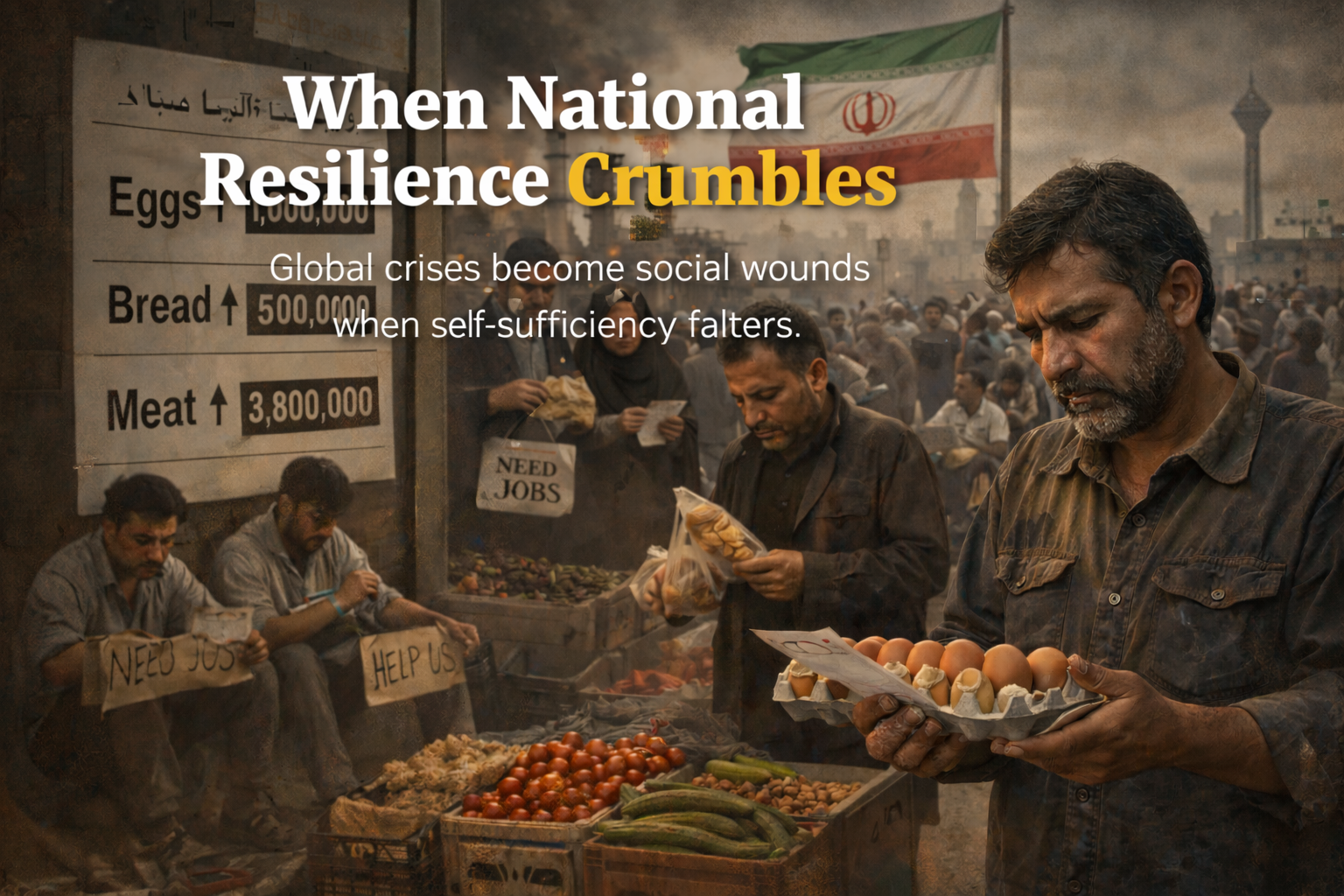
Iran offers a sobering warning. As a country endowed with vast energy resources, it should have been unshakable. Yet when it was cut off from the global banking system and pressured by sanctions, its economy faltered. Not because it was poor, but because the global system is designed to “discipline” nations that refuse to submit to its rules.
For ordinary people there, the crisis is no longer the language of statistics. It is a bitter reality in which inflation surged to 75 percent while wage increases reached only 20 percent. This widening gap ignited social unrest. The lesson is clear: when a nation loses its basic capacity for self-reliance, global shocks quickly turn into domestic tinder. When a state is more preoccupied with financing influence abroad than safeguarding purchasing power at home, sovereignty itself is at stake.
Indonesia: Ending Vulnerability
Indonesia holds immense potential, but we must not be naïve. Our food and energy security remain highly vulnerable to fluctuations in global markets. When world prices for wheat or oil spike, kitchens across the archipelago immediately feel the impact.
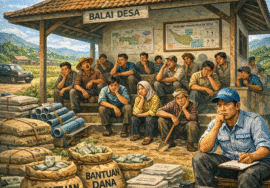
We must be honest: our natural wealth is abundant, yet too often its benefits fly abroad, leaving local communities in uncertainty. Many of our people work in the informal sector without any safety net. Acknowledging this reality is not a sign of surrender. On the contrary:
Honest recognition of internal weaknesses is the first step toward genuine self-reliance.
Without the courage to reform governance and integrity at home, independence will remain nothing more than a slogan on paper.
Self-Reliance: Sovereignty on Our Own Soil
This stance does not mean turning inward or shutting ourselves off from the world. It means building the minimum capacity needed so that we do not collapse when global conditions turn chaotic. We must not allow the fate of our people’s basic needs to be dictated entirely by foreign policies or by global market algorithms that do not take our side.
Self-reliance must take concrete form:
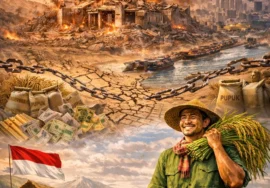
Farmers who are sovereign over their land, seeds, and fertilizers.
Affordable food rooted in our own fields, not dependent on imported ships.
Strong local economies, where communities are active subjects of development, not mere spectators.
Indonesia is far too vast to be governed from a single central point. Our strength lies in empowered regions. When regions are given the space to thrive, the nation as a whole becomes far more resilient in the face of any global storm.
Planting the Future
This is the foundation on which the Gerakan Mandiri Bangsa stands. We believe that true sovereignty is not measured solely by economic growth figures, but by the ability of every citizen to work with dignity and live with certainty.
A mature nation is one that is willing to learn before it is too late. Indonesia was not built by a single hand, but by our collective vitality. Do not entrust our future to chance or to the mercy of the world. Let us build an Indonesia that truly stands tall—self-reliant on its own feet, sovereign on its own land.