Learning from Futsal: Turning Limitations into a Power Feared by Asia
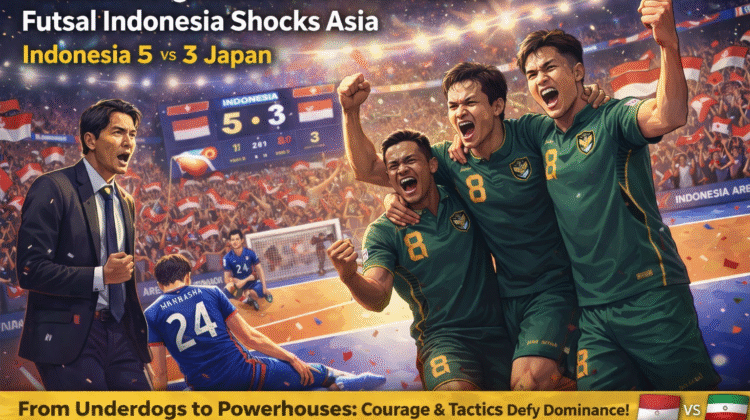
We have just witnessed a moment that sends chills down the spine. At the Indonesia Arena, a new history was written in gold. The Indonesian National Futsal Team didn’t just win against the giants of Japan; they proved their class with a convincing 5-3 victory. This triumph was so profound that even Japan’s coach (and former Indonesian coach), Kensuke Takahashi, acknowledged with deep respect that Indonesia’s progress is now unstoppable.
Bung Ropan, a senior commentator involved since the inception of Indonesian futsal in 2002, described this achievement as “extraordinary.” In the 18 editions of the AFC Futsal Asian Cup since its start in 1999, this is the first time Indonesia has successfully dismantled the duopoly of Iran and Japan to advance to the grand final.
No Longer About Facilities, But Grit
In the past, our futsal story was one of limitations. We remember the days when this sport was treated like a “neglected stepchild”—players wore leftover jerseys, and a professional league was nothing more than a dream. However, in 2026, all of that has changed.
This success is the fruit of managerial independence. When futsal was given the space to govern itself through an autonomous federation, we saw the birth of spartan talents like Samuel Eko, Ardiansyah Nur, and Ahmad Habibi. This is the true essence of the “National Self-Reliance Movement”: to stop complaining about circumstances and start building strength with our own hands.
Mental Sovereignty: Erasing the Sense of Inferiority
Last night’s match was an incredible test of character. Despite leading and then being chased to a 3-3 draw in the final seconds of normal time due to a penalty, the Garuda squad’s morale did not crumble. In extra time, stamina and tactical discipline did the talking—two additional goals secured the 5-3 victory without the need for a penalty shootout drama.
This is proof of mental sovereignty. We have stopped feeling like a “second-class nation” in the face of four-time Asian champions like Japan. Under the command of coach Hector Souto, we won not just because of “fighting spirit,” but because we were physically tougher and strategically smarter.
A Message for Other Sectors: The Recipe for Independence
Indonesia’s advancement to the final to challenge Iran is a wake-up call for anyone who still doubts the potential of this nation. Futsal has provided us with a blueprint for success that can be applied to any field:
Autonomous Organizational Structure: Enables fast, professional decision-making, free from the shackles of slow bureaucracy.
Tactical Intelligence (Data-Driven): Stop just working hard; start working smart. The use of data analysis has changed how we compete on a global level.
Infrastructure & Public Support: The Indonesia Arena stands as a witness that when independent facilities are available and the people unite in support, the energy generated is limitless.
A New Hope
The 5-3 victory over Japan is a message to all Indonesians: if we choose to be self-reliant and professional, the world’s peak is no longer just a dream. The futsal court has provided a concrete example. Now, the question is: when will we bring this same spirit of independence to other strategic sectors of our nation?
Tonight we celebrate history. Tomorrow, we finish the job in the final to become the Kings of Asia!
#NationalSelfReliance #IndonesianFutsal #SovereignAchievement #FutsalAsianCup2026 #IndependentIndonesia
References: